Why Does Long Jing Green Tea Change Color? The Role of Water pH Explained
The color and taste of long jing green tea can change significantly depending on water quality. Differences in purified water and mineral water affect the tea liquor, especially its yellow-green color, clarity, and flavor stability. This is mainly due to variations in pH value of mineral water and mineral content, which influence oxidation and extraction in the aqueous solution. Purified water helps preserve freshness, while alkaline water can darken the infusion. Even with identical tea leaves and brewing conditions, different types of water can lead to noticeable changes in both tea liquor appearance and taste of the tea.
tea drinkers notice that long jing green tea sometimes changes in appearance or even flavor during brewing. One cup may look fresh and bright, while another turns dull or slightly brown after standing. In many cases, the real reason is not the tea itself, but the water being used.
This difference can be confusing, especially when the taste of the tea also shifts even though brewing time and temperature remain the same.

Same Tea, Different Results
In controlled brewing comparisons, identical tea leaves and green tea samples were used from the same batch. The brewing ratio, water temperature, and steeping time were carefully kept consistent.
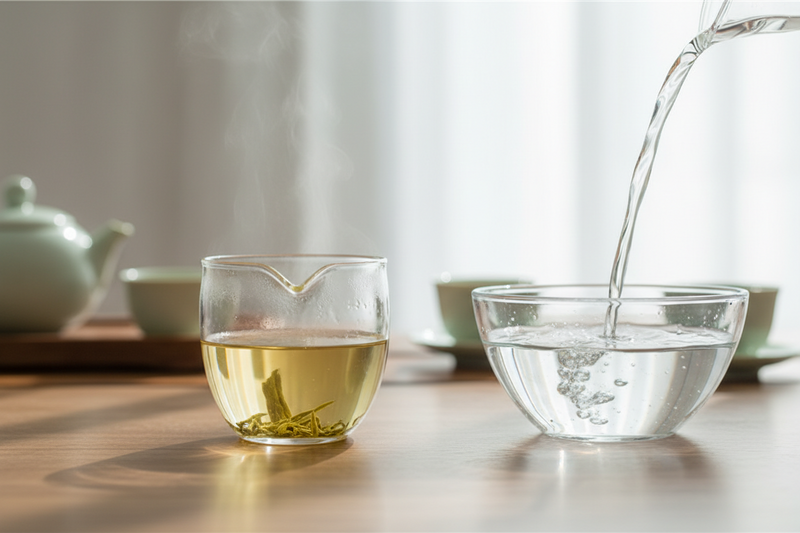
However, the resulting tea liquor showed clear differences depending on the water source. One infusion maintained a bright yellow - green color, while another quickly turned darker after a short period of exposure to air.
Why Water Type Matters in Brewing
A key factor behind this difference is the types of water used. In tea preparation, common options include purified water and mineral water, each with distinct chemical properties.
Purified water is low in dissolved minerals and provides a neutral brewing environment. Mineral water, however, contains ions that can influence extraction and oxidation behavior in tea.

Understanding the pH Value of Mineral Water
One of the most important variables is the ph value of mineral water. In practical observations, mineral water often measures around pH 8, while purified water is closer to pH 6.
This difference means the water behaves more alkaline or slightly acidic within an aqueous solution, which directly affects how tea compounds interact during brewing.
How Tea Liquor Changes in Color
The most visible effect appears in the tea liquor. With higher pH water, the infusion may darken more quickly and lose its fresh clarity.
In contrast, lower pH or neutral water helps maintain a brighter yellow - green color, especially in delicate green teas like Long Jing.
A Brewing Observation with Green Tea Samples
During repeated brewing tests using identical green tea samples, a clear pattern emerged. When brewed with purified water, the infusion stayed stable and fresh-looking.
When switched to mineral water, the liquor darkened faster and appeared less vibrant, even though the same long jing green tea was used.
The Role of Purified Water in Stability
Using purified water helps maintain consistency in tea brewing. Because it contains fewer minerals, it reduces interference during extraction.
This leads to a cleaner cup, better color stability, and a more accurate expression of the tea’s natural character.
What Happens Inside the Aqueous Solution
Tea brewing is essentially a chemical process inside an aqueous solution, where water acts as the medium for extracting compounds from leaves.
Within this system, minerals, oxygen, and temperature interact with tea polyphenols, amino acids, and other soluble components.
Why Tea Leaves React Differently
Different tea leaves contain varying levels of polyphenols and natural compounds. These substances are sensitive to oxidation and mineral interaction.
When exposed to alkaline conditions, oxidation can accelerate, causing the liquor to darken more rapidly.
Understanding Tea Liquor Transformation
The evolution of tea liquor color is not random. It reflects chemical changes during extraction and oxidation.
In stable conditions, the liquor remains bright and transparent. Under higher alkalinity, it can shift toward a darker tone more quickly.
Why Long Jing Green Tea Is Sensitive
As a delicate long jing green tea, it is especially sensitive to brewing conditions. Its fresh aroma and vegetal sweetness depend on careful balance.
Even slight differences in water composition can significantly influence clarity and flavor perception.
Comparing Types of Water in Brewing
When evaluating types of water, the main difference lies in mineral content and pH level. These two factors work together to influence extraction speed and oxidation rate.
Mineral-rich water may slow certain dissolutions while accelerating chemical changes in other compounds.
Practical Brewing Differences
In side-by-side comparisons, purified water produced a stable, bright infusion, while mineral water caused faster color change in the same green tea samples.
This demonstrates how sensitive tea is to environmental variables beyond just leaves and temperature.
The Importance of pH in Tea Brewing
The ph value of mineral water plays a crucial role in determining tea behavior. Slightly alkaline water tends to promote oxidation, which affects both appearance and flavor.
Slightly acidic or neutral water helps preserve freshness and brightness in the cup.
How Water Influences Taste of Tea
Water does not only affect color—it also changes the taste of the tea. Mineral content can either enhance or mute subtle sweetness and aroma.
As a result, the same long jing green tea may taste richer in one water type and flatter in another.
Tea Brewing as a Chemical System
From a scientific perspective, tea brewing is a dynamic aqueous solution where multiple reactions occur simultaneously.
These reactions are influenced by temperature, oxygen exposure, and especially water composition.
Why Purity of Water Matters
Many tea practitioners prefer purified water because it offers consistency. It allows tea to express its natural profile without external interference.
This makes it especially useful for evaluating premium green teas or comparing batches.
Final Insight: Water Shapes the Cup
Ultimately, tea quality is not determined by leaves alone. Even high-quality tea leaves can produce different results depending on water.
Understanding the ph value of mineral water, mineral content, and water type helps explain why the same long jing green tea can look and taste so different.
In tea appreciation, water is not just a medium—it is an essential part of the brewing system that shapes every aspect of the final cup.